Nuwon Energy
1 / 5
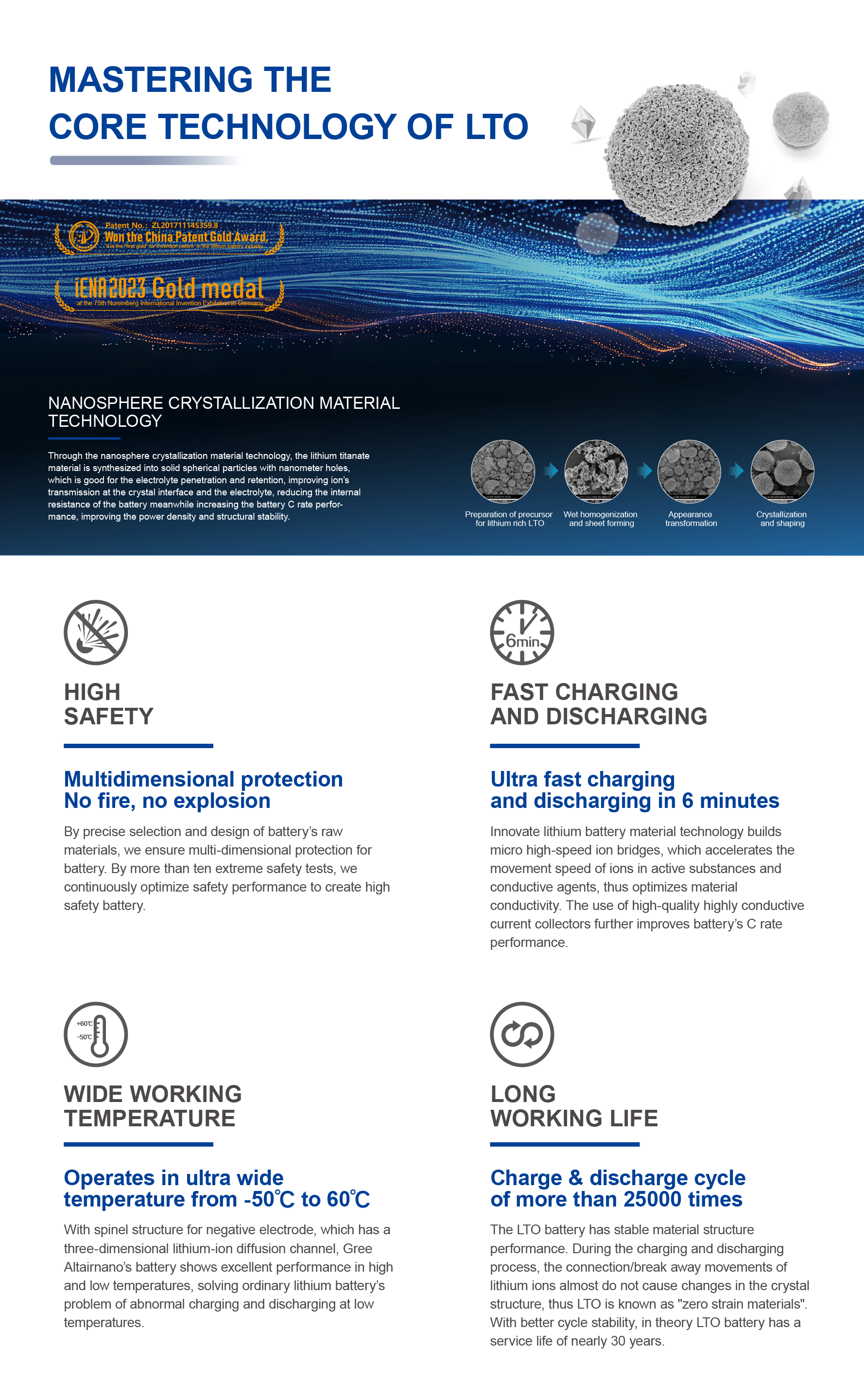
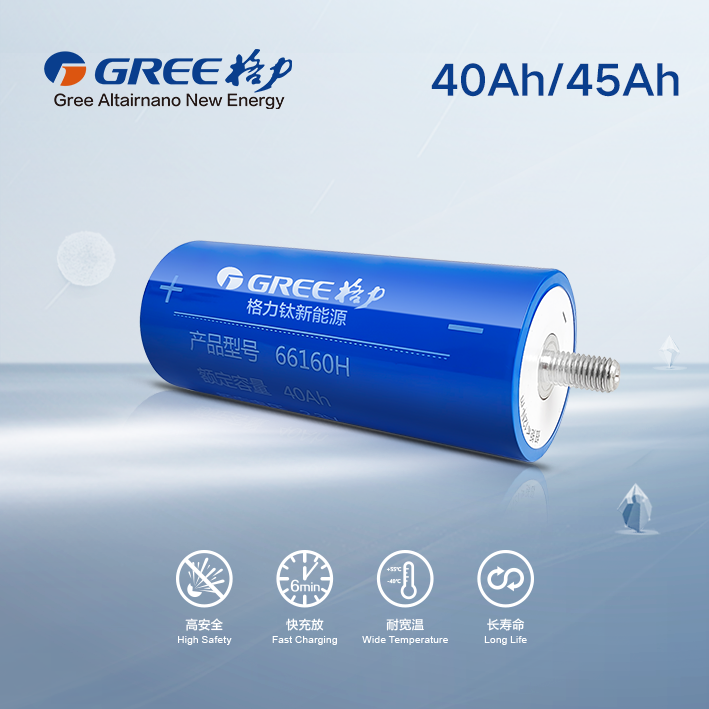
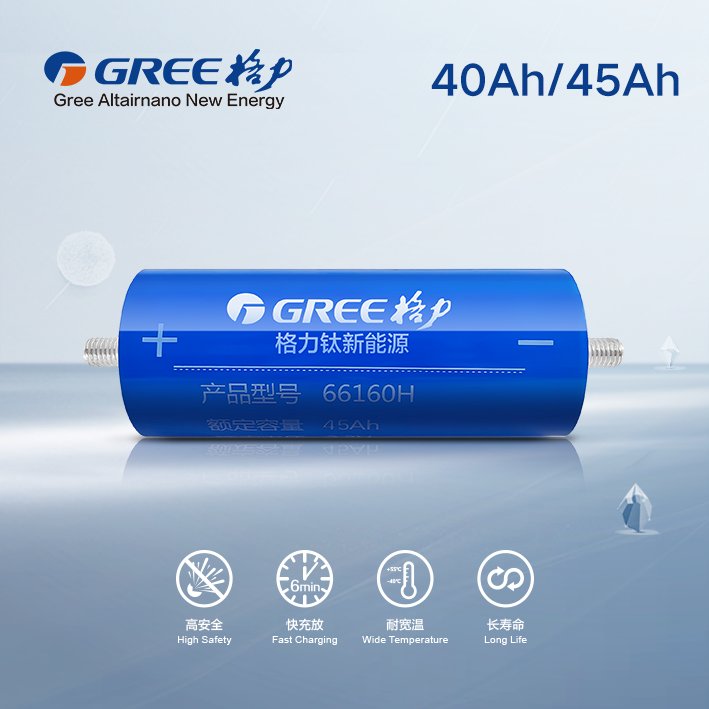
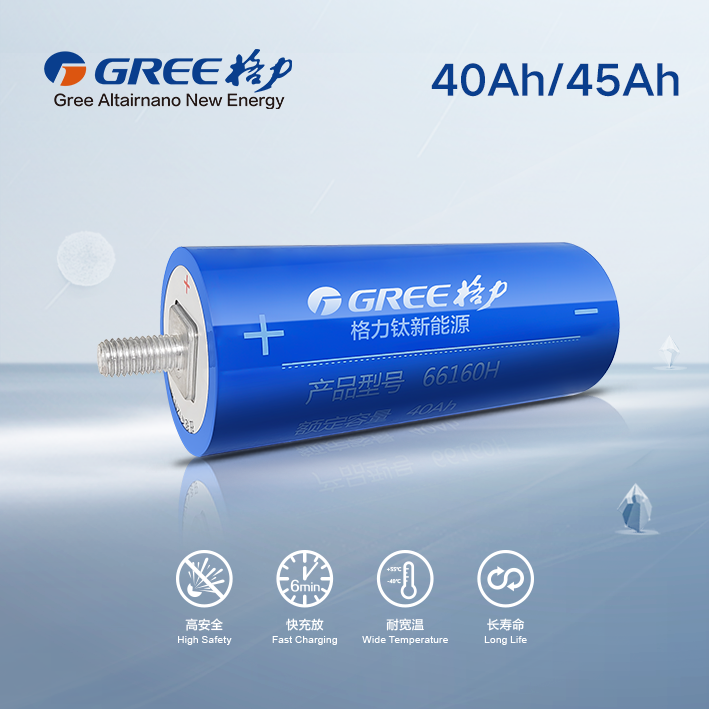
Through the nanosphere crystallization material technology, the lithium titanate material is synthesized into solid spherical particles with nanometer holes, which is good for the electrolyte penetration and retention, improving ion’s transmission at the crystal interface and the electrolyte, reducing the internal resistance of the battery meanwhile increasing the battery C rate performance, improving the power density and structural stability.
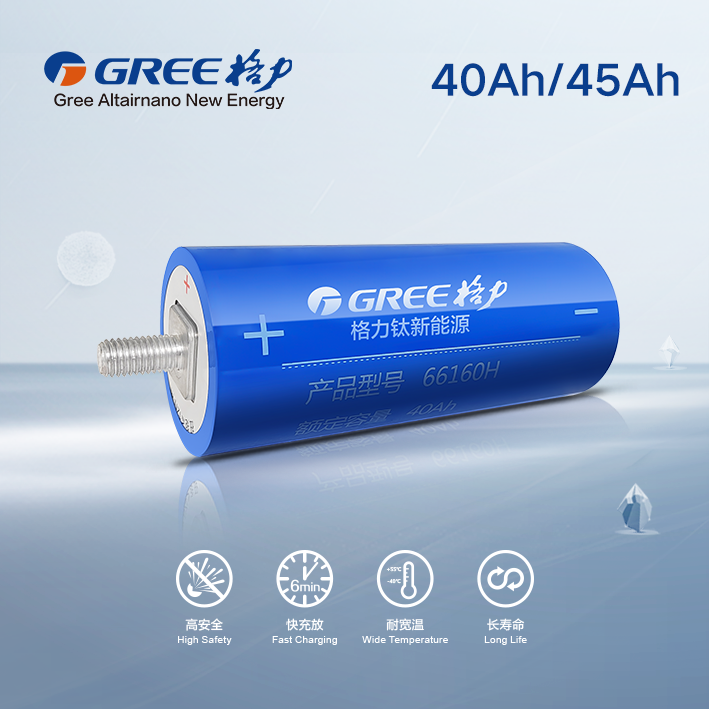
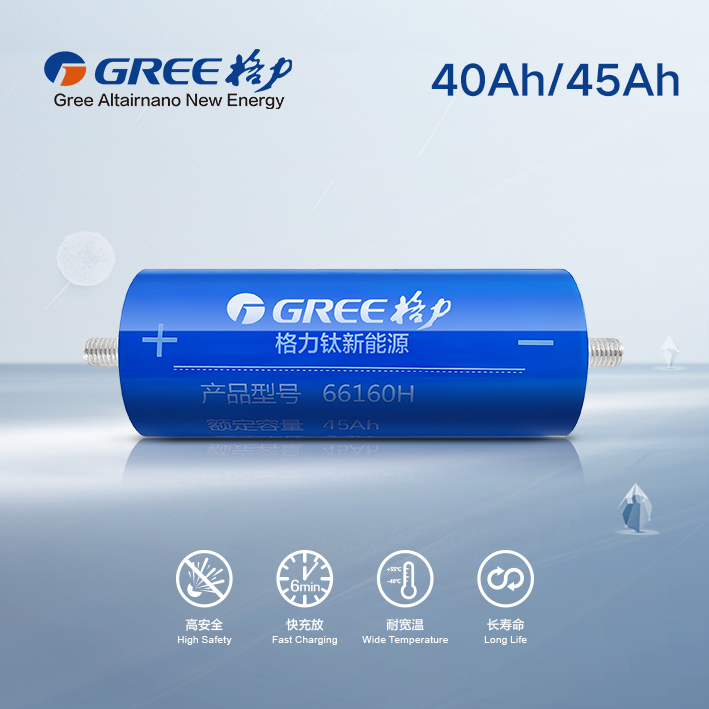
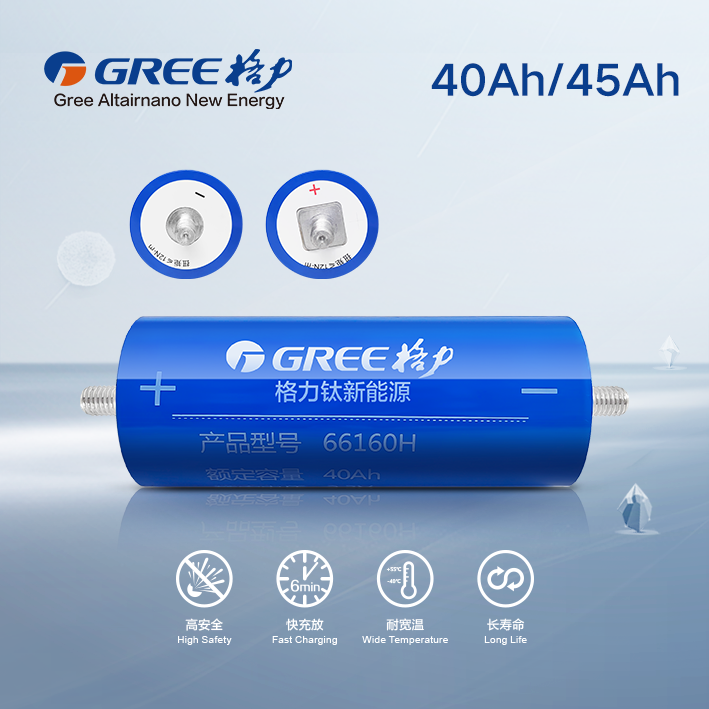
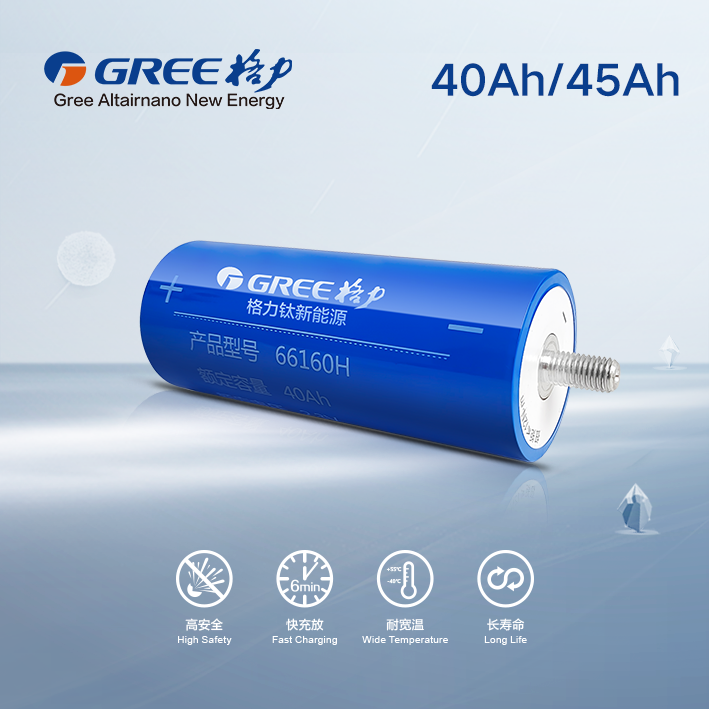
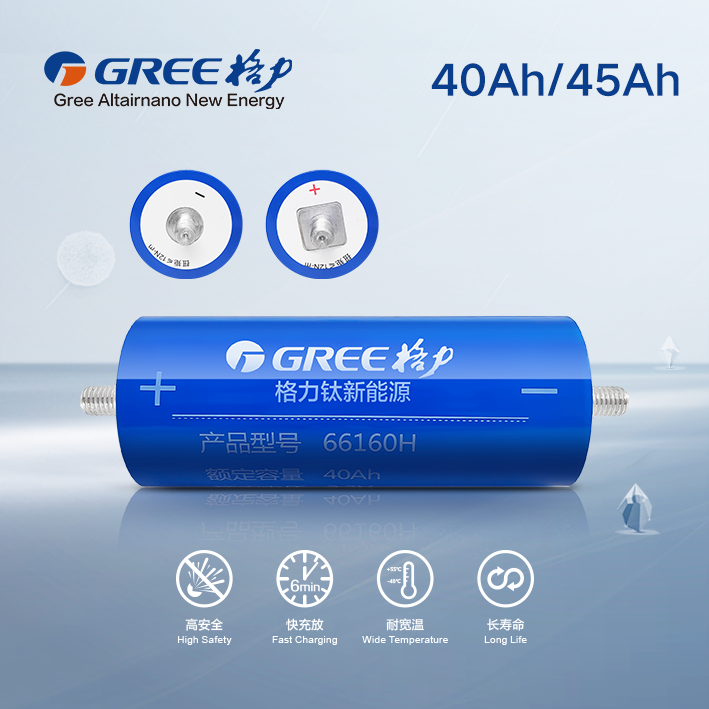
| Nominal capacity (Ah) | 45 |
| Nominal voltage (V) | 2.3 |
| Voltage range (V) | 1.5-2.9 |
| Specific energy (Wh/kg) | 82 |
| Internal resistance (mΩ) | ≤0.7 |
| Maximum continuous charge / discharge current (A) | 240 |
| Maximum pulse charge / discharge current (A) (25°C, 50% SOC); sustainable time (s) | 400; 10 |
| Operating temperature range (°C) | -40~55 |
| Cycle life (times) (25°C, 1C charge, 1C discharge, 100% DOD, 80% EOL) | 25000 |
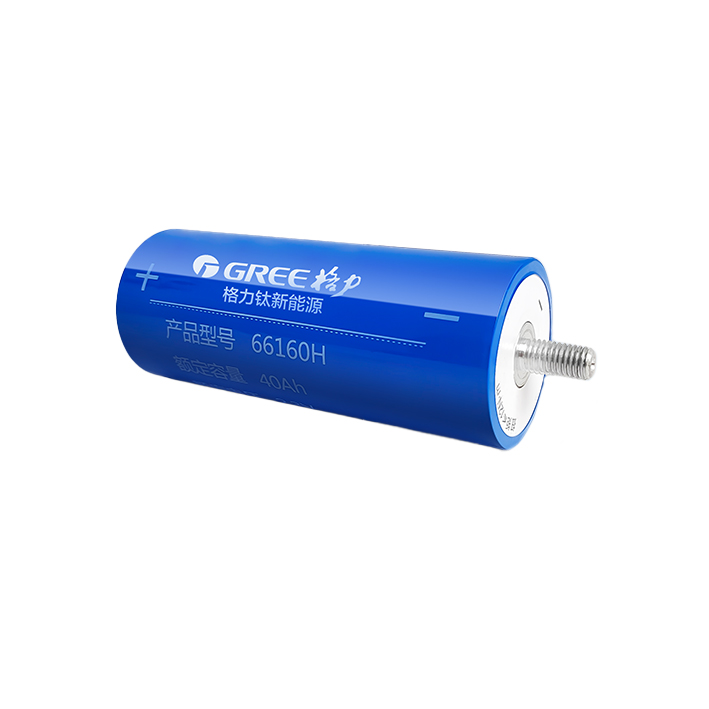
| Diameter×Height (mm) | (66.0±0.5)×(161.0±0.5) |
| Weight (g) | 1255±30 |
| Product certification / Comply with standards | IEC62660-2, IEC62660-3, IEC62619, IEC62620, UL1973, GB/T31484-2015, GB/T31486-2015, GB38031-2020, UN38.3, REACH SVHC, China ROHS, EU ROHS (complete machine), China Classification Society's GUIDELINES FOR SURVEYS OF PURE BATTERY-POWERED SHIPS (2019) Chapters 3 and 7, Regulation Concerning Batteries and Waste Batteries (EU) (hazardous substance) |