Why do electric vehicles use 21700 cylindrical cells? The answer combines energy density, manufacturing scale, thermal control, and proven reliability. The 21700 format measures approximately 21 millimeters wide and 70 millimeters long. It stores more active material than the older 18650 cell, while remaining compatible with automated cylindrical-cell production.
The International Energy Agency’s Global EV Outlook 2025 reports that electric car sales exceeded 17 million worldwide in 2024. That growth increases pressure on manufacturers to reduce cost without sacrificing driving range or safety. BloombergNEF’s 2024 Battery Price Survey recorded an average lithium-ion battery-pack price of 115 dollars per kilowatt-hour, a 20% decline from 2023. Larger cylindrical cells can reduce the number of welds, connectors, and monitoring points required in a battery pack. Fewer components can mean simpler assembly. It does not guarantee better engineering.
Elon Musk described Tesla’s 2170 cell during the company’s 2017 earnings call as having “the highest energy density and the lowest cost cell in the world.” This statement reflects the format’s commercial promise, not a universal verdict. In real vehicles, chemistry, cooling channels, cell spacing, software, and production quality matter just as much. A 21700 cell may deliver stronger range and packaging efficiency, yet larger cells can create more demanding thermal-management challenges when faults occur. That trade-off deserves attention. The practical question is not only why do electric vehicles use 21700 cylindrical cells, but whether each manufacturer can control their limitations at scale.
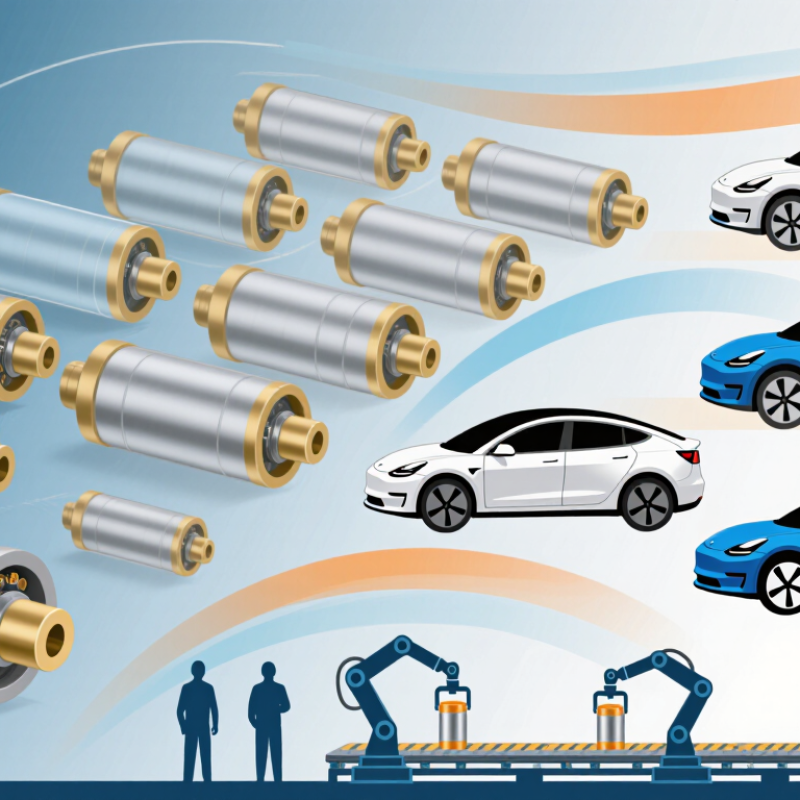
What Is a 21700 Cylindrical Cell?
A 21700 cylindrical cell is a rechargeable lithium-ion cell with a nominal diameter of 21 millimeters and a height of 70 millimeters. The numbers describe its format, not its chemistry. A 21700 cell may use different cathode materials, such as nickel-rich or iron-based compounds. Its steel casing protects a tightly wound electrode assembly, separator, electrolyte, safety vent, and current collectors.
The name sounds precise. It is not the whole story. Actual dimensions can vary slightly because of insulation, sealing, and manufacturing tolerances. During testing, engineers also examine capacity, voltage range, internal resistance, thermal behavior, and cycle life. A larger cylindrical format usually provides more active material per cell than an older 18650 format. It can also reduce the relative amount of casing and electrical connections per watt-hour. That advantage is practical, but not automatic.
The International Energy Agency reported that electric-vehicle battery demand exceeded 750 GWh in 2023. BloombergNEF’s 2023 Battery Price Survey placed the average lithium-ion battery pack price at 139 dollars per kWh. These figures explain the industry’s pressure to improve energy density and manufacturing efficiency. In a real battery pack, hundreds or thousands of cells must share current evenly. Small differences in resistance can create heat, imbalance, and faster aging. Cell selection therefore involves more than size. Engineers must match the cell’s chemistry, cooling path, charging limits, and operating conditions. The 21700 format is useful, but it should never be treated as a guarantee of superior performance.
Why EV Manufacturers Choose the 21700 Format
Electric vehicle manufacturers choose 21700 cylindrical cells because they balance energy, power, cost, and production efficiency. The name describes an approximate diameter of 21 millimeters and length of 70 millimeters. This larger body can store more energy than many older cylindrical formats. Fewer cells may be needed for the same battery capacity. That can reduce connections, sensors, and assembly work.
The format also supports established cylindrical-cell manufacturing methods. Factories can use automated winding, welding, inspection, and testing equipment. Consistent dimensions help engineers design modular battery packs with predictable spacing. A larger cell may reduce the relative surface area of casing and electrical connections. This can improve packaging efficiency, although thermal behavior still requires careful engineering. Cooling plates, conductive paths, and cell spacing must manage heat during fast charging and acceleration.
It is not a perfect choice. Larger cells can make heat removal more demanding if internal faults occur. Cell chemistry, electrode design, and quality control matter as much as the outer size. Real-world performance also changes with climate, charging habits, and vehicle software. Some engineers may prefer smaller cells for finer thermal control. Others accept the trade-off for higher manufacturing productivity and usable pack capacity. The decision is practical, not universal. A 21700 cell is only one part of a larger battery system.
Representative cylindrical-cell specifications show why the 21700 format is attractive for electric vehicles. A 21700 cell is wider and longer than an 18650 cell, allowing more active material and approximately 30% more nominal energy per cell. For a 75 kWh battery pack, this can reduce the estimated number of cells and interconnections, helping simplify pack assembly while maintaining a practical balance between energy capacity, thermal management, and manufacturing efficiency.
21700 cylindrical cells measure about 21 millimeters wide and 70 millimeters long. Their larger format stores more active material than older 18650 cells. That increase can raise energy density at both cell and pack levels. More watt-hours in a similar space gives engineers extra flexibility. Some packs gain driving range. Others use the space for stronger cooling or safety structures.
From a battery engineering perspective, fewer cells can simplify module construction. Fewer electrical connections may reduce resistance and manufacturing complexity. The result can be a cleaner current path with less wasted energy. Real-world results vary. Larger cells also generate heat internally. Cooling channels must reach each cell effectively. Poor thermal design can erase part of the expected advantage.
Driving range still depends on chemistry, vehicle weight, aerodynamics, software, tire pressure, and weather. Cold mornings expose weaknesses quickly. A 21700 cell does not guarantee long-distance performance. Testing should measure usable energy, charging behavior, degradation, and temperature control. I would treat headline energy-density figures carefully. Laboratory numbers can look impressive, while highway wind and cabin heating reveal a different reality. The format is promising, but its benefits depend on careful pack engineering.
2026 Best Why Do EVs Use 21700 Cylindrical Cells?
Thermal Management and Safety in 21700 Battery Packs
21700 cells offer a useful balance between energy capacity, packaging, and cooling control. Their larger format can reduce the number of cells in a battery pack. Fewer cells may mean fewer electrical connections and fewer potential failure points. However, size alone does not guarantee safety.
In practical pack development, engineers place cells within carefully designed modules. Cooling plates or channels remove heat during rapid charging and high-load driving. Temperature sensors monitor several areas, not just the pack surface. A battery management system can reduce current when temperatures rise unexpectedly. Cell spacing also matters. It helps limit heat transfer during a fault and gives pressure gases a safer escape route. Mechanical barriers can slow thermal propagation, although no barrier is perfect.
Tips: Keep charging and driving limits within tested specifications. Avoid covering cooling paths or ignoring repeated temperature warnings. Professional testing should include vibration, overcharge protection, crush resistance, and thermal-abuse scenarios. These tests reveal weaknesses that computer models may miss. Real-world data matters.
A reliable 21700 battery pack needs balanced cells, consistent welds, accurate sensors, and stable software. Engineers must also inspect cooling performance after aging tests. This step is sometimes underestimated. Capacity loss changes heat generation over time. Good design therefore treats thermal safety as an ongoing process, not a single certification task.
21700 cells have become practical building blocks for many EV battery packs. Their larger diameter stores more energy than 18650 cells while retaining a cylindrical format. In production, this size can reduce the number of cells, welds, and monitoring connections required. Fewer parts may simplify assembly and reduce potential failure points. That sounds straightforward. It is not always simple.
Manufacturers benefit from mature winding, coating, and formation equipment adapted to cylindrical cells. The 21700 format also balances energy density, cooling access, and mechanical consistency. Automated lines can inspect dimensions, weld quality, voltage, and internal resistance at high speed. Consistent geometry supports predictable pack design. From factory testing, small process variations still matter. A slight misalignment can affect welding or cooling contact.
Limitations appear when larger cells generate heat during fast charging or heavy acceleration. Their increased capacity may reduce cell count, but each cell stores more energy. A defect can therefore create greater local consequences. Thermal barriers, reliable venting, and accurate battery management remain essential. Pack designers must also manage swelling, vibration, and aging performance. Recycling remains difficult because mixed materials complicate separation. The 21700 format is efficient, but not automatically superior. Its results depend on chemistry, cooling layout, quality control, and driving conditions. Some assumptions still need testing.
They are about 21 millimeters wide and 70 millimeters long. Their larger size holds more active material than older cylindrical cells.
They can store more watt-hours in similar battery space. Some vehicles use that capacity for extra range. Others reserve space for cooling and safety structures.
No. Range also depends on chemistry, vehicle weight, aerodynamics, tires, software, and weather. Cold mornings can expose weaknesses quickly.
Yes. Fewer cells may require fewer electrical connections. This can reduce resistance and manufacturing complexity. The benefit is real, but not automatic.
Larger cells can generate significant internal heat. Cooling plates or channels must reach each cell effectively. Poor cooling can erase part of the expected advantage.
Temperature sensors check several areas inside the pack. A battery-management system can reduce current when temperatures rise unexpectedly. Surface readings alone are insufficient.
Cell spacing can limit heat transfer during a fault. Mechanical barriers may slow thermal propagation. Pressure gases also need safer escape routes.
Testing should measure usable energy, charging behavior, aging, vibration, crush resistance, and temperature control. Overcharge protection and thermal-abuse tests matter too. Computer models can miss ugly details.
Keep charging and driving within tested limits. Do not cover cooling paths. Repeated warnings deserve professional inspection. Ignoring them is a poor gamble.
No. Laboratory figures may look impressive. Highway wind, cabin heating, and cold weather can produce different results. I would treat headline numbers carefully.
A 21700 cylindrical cell is a rechargeable battery cell measuring approximately 21 millimeters in diameter and 70 millimeters in length. Its larger size compared with earlier cylindrical formats allows it to store more energy in each unit, reducing the number of cells needed for an electric vehicle battery pack. This helps simplify pack design while supporting higher energy capacity, longer driving range, and efficient use of internal space. Understanding why do electric vehicles use 21700 cylindrical cells begins with their balance of size, performance, durability, and production practicality.
In EV battery packs, 21700 cells can support effective thermal management when arranged with suitable cooling paths, sensors, and protective controls. Their cylindrical structure also provides mechanical strength and consistent manufacturing results. However, larger cells may create greater heat-management challenges if damaged or operated under extreme conditions, so careful pack engineering is essential. Although 21700 cells offer strong energy density and manufacturing benefits, they can involve limitations such as increased cooling demands, design complexity, and the need for precise monitoring to maintain safety and long-term performance.
Nuwon Energy