Pouch cells look simple, but their packaging carries serious safety responsibility. The thin aluminum-laminate film protects electrodes, electrolyte, and internal pressure. A small crease near the seal can become a larger failure point during assembly, shipping, or cycling. This is why learning how to spot damage on pouch cell packaging matters for engineers, technicians, and quality teams.
The International Energy Agency’s Global EV Outlook 2025 reports that global electric car sales exceeded 17 million in 2024. More cells are entering vehicles, storage systems, and laboratory lines. The risks are also becoming harder to overlook. UL Research Institutes explains that mechanical damage can contribute to internal short circuits and thermal runaway. Look closely at seal wrinkles, corner tears, swelling, punctures, delamination, and abnormal electrolyte stains. Check the pouch under consistent lighting. Measure seal width when possible. Record photographs, batch numbers, and handling conditions.
A clean surface proves little.
Battery safety author Isidor Buchmann wrote, “There are no inherently safe batteries, only safer batteries.” His point remains practical. Packaging inspection cannot reveal every internal defect, and visual checks can miss early damage. That limitation deserves honesty. A good inspection process combines experience, controlled handling, dimensional checks, electrical testing, and documented acceptance criteria. The following seven tips provide a practical starting point. They are not a substitute for manufacturer procedures, trained judgment, or validated safety controls.
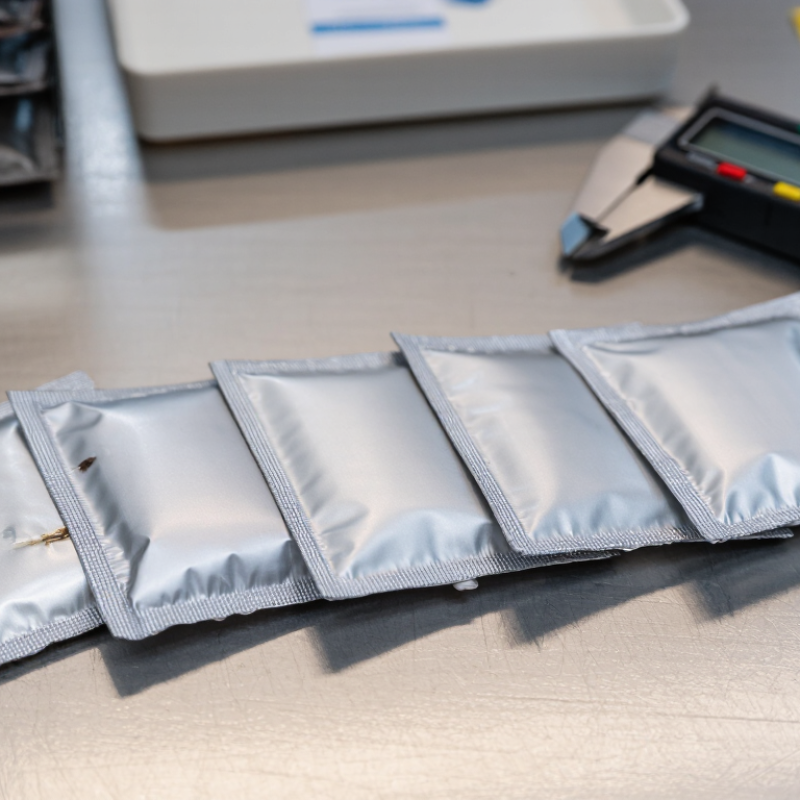
What Pouch Cell Packaging Damage Looks Like
Pouch cell packaging damage often appears before a serious failure. Look closely. A healthy pouch usually has flat surfaces, clean seals, and consistent edges. Bulging or pillow-like swelling may indicate internal gas buildup. It can feel firm, uneven, or warmer than nearby cells. Do not guess. Stop handling the cell if swelling increases, especially during charging or storage.
Inspect the aluminum laminate for deep dents, sharp creases, scratches, pinholes, or torn areas. A small wrinkle may seem harmless, but repeated folding can weaken the barrier layer. Discoloration near a seal may show heat exposure. White, oily, or sticky residue around the edge can suggest electrolyte leakage. Corrosion, lifting layers, and separated seals deserve careful attention. These signs are easy to miss under poor lighting.
Check the corners and tabs closely. A loose tab, cracked insulation, or exposed metal can create a contact hazard. Compare the cell with an undamaged sample when possible. This makes subtle swelling easier to see. Record photos, location, temperature, and inspection time. Avoid pressing, puncturing, bending, or charging a damaged pouch cell. Follow the site’s battery safety procedure and let qualified personnel assess it. One limitation matters: surface appearance alone cannot confirm internal condition. A cell may look normal while hidden damage remains.
| Tip | Packaging Area to Inspect | What Damage Looks Like | Likely Risk | Recommended Inspection or Action | Severity |
|---|---|---|---|---|---|
| 1 | Outer pouch film | Cuts, punctures, pinholes, deep scratches, exposed layers, or a visible metallic layer. Any tear that passes through the outer film is a significant defect. | Loss of moisture and oxygen barrier protection; possible electrolyte leakage or internal contamination. | Inspect under bright, angled light and rotate the cell to view all surfaces. Isolate cells with cuts, punctures, or exposed internal layers and do not use them. | Critical |
| 2 | Heat-sealed edges | Wrinkles crossing the seal, incomplete or narrow seal areas, delamination, burn marks, channels, lifted film, or a seal that opens under gentle visual inspection. | Reduced seal strength and a higher chance of moisture ingress or electrolyte leakage. | Check the entire perimeter, including corners. Compare the seal width and appearance with the approved production sample. Quarantine any cell with an open, contaminated, or visibly incomplete seal. | Critical |
| 3 | Electrolyte leakage | Wet spots, oily residue, crystal-like deposits, unusual odor, or discoloration near the seal, tabs, or pouch surface. | Chemical exposure, corrosion, reduced cell performance, and potential safety hazards. | Do not touch suspected residue with bare hands. Move the cell to a controlled area, follow the site chemical-handling procedure, and prevent contact with other cells. | Critical |
| 4 | Swelling or gas generation | A pouch that is noticeably bulged, pillow-shaped, rounded at the edges, or no longer lies flat. New swelling compared with the original inspection record is especially important. | Possible gas generation, internal reaction, overcharge history, overheating, or cell degradation. | Do not compress, puncture, fold, charge, or install the cell. Remove it from service and handle it according to the applicable battery safety procedure. | Critical |
| 5 | Tab exit areas | Torn film around a positive or negative tab, bent tabs, sharp creases, exposed sealant, tab movement, or signs that the tab has pulled against the pouch. | Localized sealing failure, internal short-circuit risk, electrical connection problems, or leakage. | Inspect both tab exits from multiple angles. Avoid bending or pulling the tabs. Reject cells with torn insulation, loose tabs, or damaged sealing around the tab area. | Critical |
| 6 | Creases, folds, and compression marks | Deep permanent folds, sharp corner impressions, crushing, dents, or localized marks caused by clamping, stacking, dropping, or transport pressure. | Possible damage to internal electrode layers, separators, current collectors, or pouch seals. | Distinguish harmless shallow handling marks from sharp or permanent deformation. Record the location, photograph the defect, and quarantine any cell with severe or localized compression damage. | Warning |
| 7 | Discoloration and contamination | Darkened or heat-affected areas, white residue, corrosion near tabs, dirt trapped in a seal, adhesive transfer, or foreign particles on the pouch surface. | Possible overheating, chemical reaction, seal contamination, corrosion, or reduced packaging integrity. | Compare the cell with an approved visual reference. Clean only when the approved procedure permits it; never remove material from a seal by scraping. Escalate unexplained discoloration or corrosion. | Warning |
It usually has flat surfaces, clean seals, and consistent edges. The surface should not bulge or feel unusually warm.
Swelling may indicate internal gas buildup or stress. Stop handling the cell if swelling increases. Especially during charging or storage.
Check for deep dents, sharp creases, scratches, pinholes, tears, and flattened edges. Tiny openings still matter.
Use bright, angled light. It can reveal shallow scratches, fine punctures, wrinkles, and cloudy abrasion patches.
No. Do not press, bend, puncture, or drag tools across the pouch. These actions may worsen hidden damage.
White, oily, or sticky residue may suggest leakage. Discoloration near a seal may show heat exposure. Avoid direct contact.
Examine corners, tabs, seals, and insulation closely. Look for loose tabs, exposed metal, cracked insulation, lifting layers, or separated seals.
Record photos, location, size, temperature, and inspection time. Include a ruler beside the defect for scale.
Stop inspection if you notice heat, odor, leakage, or rapid swelling. Keep the cell away from combustible materials through approved procedures.
No. A normal-looking pouch may hide internal damage. My earlier inspections focused too much on large tears. That was a mistake.
Learning how to spot damage on pouch cell packaging is essential for identifying potential safety risks before a cell is used or stored. Begin by examining the outer surface for tears, punctures, deep scratches, or abrasions that may expose or weaken the protective layers. Carefully inspect the seals, edges, and corners for lifting, separation, fluid traces, or other signs of leakage. These areas are especially important because damage can allow moisture or contaminants to enter the cell.
Also look for swelling, unusual wrinkles, discoloration, corrosion, or changes in the package shape, as these may indicate internal stress or deterioration. Record the location and severity of any damage with clear notes or photographs, and avoid using a cell when the packaging is badly compromised, leaking, swollen, or otherwise unstable. When the condition is uncertain, isolate the cell in a suitable controlled area and request evaluation from a qualified professional rather than attempting to repair or open it.

 Nuwon Energy