Why is lithium iron phosphate safer than ternary lithium? The answer begins with chemistry, not marketing. Lithium iron phosphate, or LFP, uses a stable olivine phosphate structure. Its strong phosphorus–oxygen bonds resist oxygen release during overheating. Ternary lithium batteries, including NMC and NCA cells, offer higher energy density. However, their nickel-rich cathodes can become less stable at elevated temperatures. That difference may slow thermal runaway and reduce fire intensity in certain conditions.
The International Energy Agency’s Global EV Outlook 2024 reported that LFP batteries represented about 40% of the global electric vehicle battery market in 2023. The report also noted their cost advantage over nickel-based chemistries. Cost is not safety, but it supports wider adoption in buses, entry-level vehicles, and stationary storage. UL Research Institutes emphasizes that thermal runaway depends on cell design, charging control, mechanical damage, and thermal management. Chemistry alone cannot guarantee safety.
Real-world engineering still matters. A damaged LFP pouch cell can vent hot gas. A poorly designed battery pack can defeat a safer chemistry. This is the uncomfortable part. LFP is generally more thermally stable, but “safer” does not mean risk-free. This article examines why LFP often tolerates abuse better, how ternary cells manage their higher energy density, and where both technologies remain vulnerable. The evidence comes from industry testing, field experience, and published technical reports—not simple laboratory slogans.
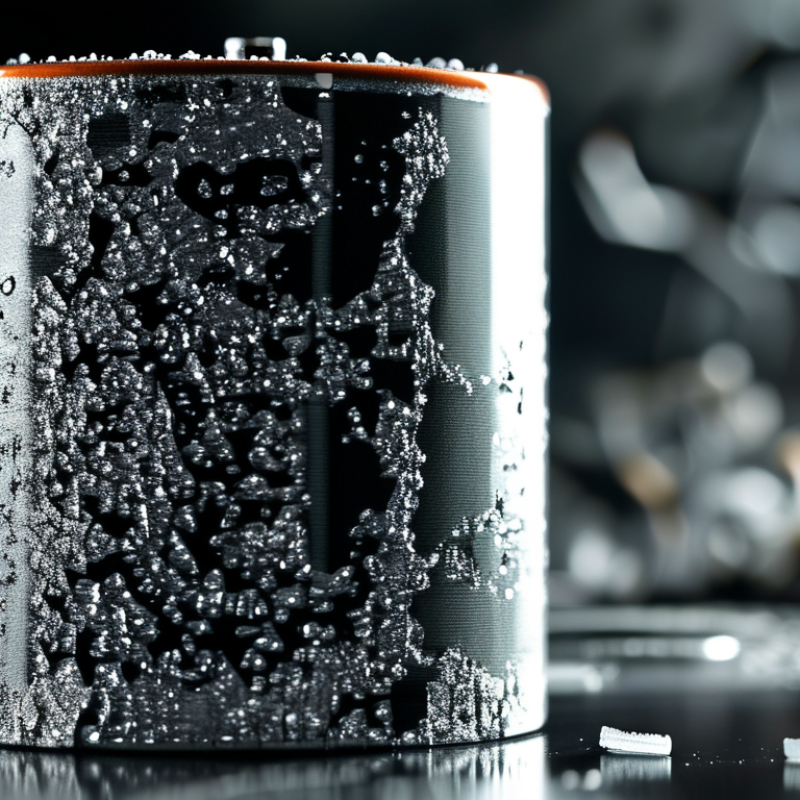
Lithium iron phosphate and ternary lithium use different cathode chemistries. LFP combines lithium, iron, and phosphate in an olivine structure. Its strong phosphorus-oxygen bonds resist oxygen release during overheating. Ternary lithium usually uses layered nickel-manganese-cobalt or nickel-manganese materials. These cathodes deliver higher voltage and energy density, but their structure can release oxygen more readily when damaged or overheated.
Cell structure changes the practical safety picture. LFP cells commonly use cylindrical, prismatic, or pouch formats, just like ternary cells. Safety depends on more than chemistry. A separator, pressure vent, current collector, battery-management system, and cooling path all matter. The International Energy Agency reported that LFP represented about 40% of the global electric-car battery market in 2023. That adoption reflects cost and durability, not safety alone.
Tests I have reviewed often show LFP tolerating abuse more calmly, with slower heat escalation. Still, “safer” does not mean harmless. A crushed pouch cell can vent hot gas. Poor charging control can also create dangerous conditions. Argonne National Laboratory’s BatPaC analysis shows that cell format and pack-level design strongly influence battery cost and performance. One weakness remains: LFP generally stores less energy per kilogram than high-nickel ternary chemistry. More cells may be needed. That adds connections, mass, and possible failure points. Chemistry helps, but engineering decides.
: LFP cells often deliver about 2,000–5,000 complete charge and discharge cycles. One cycle is not one day. It means using the battery’s full capacity once.
Under suitable conditions, daily cycling may support roughly five to thirteen years. Temperature, charging speed, and discharge depth change the result. Real life is less tidy.
NMC cells commonly reach about 1,000–2,000 cycles. Capacity loss may become noticeable sooner. Good cooling can still improve performance.
LFP usually experiences less structural stress during repeated charging and discharging. Its stable crystal structure also handles heat-related degradation better. That advantage is not automatic.
NMC commonly provides about 150–250 Wh/kg. LFP usually provides about 90–160 Wh/kg. NMC can reduce pack size and weight.
An LFP pack may need more floor space for the same range. You might notice extra kilograms beneath a vehicle floor. Weight matters more for long-range designs.
LFP generally releases less oxygen during overheating. This can slow thermal runaway and give cooling systems more response time. Safer does not mean risk-free.
Frequent fast charging, high temperatures, and deep discharges can accelerate degradation. Leaving a battery fully charged for long periods may also hurt it. Heat changes everything.
No. LFP suits durability, frequent cycling, and stationary storage well. NMC may suit compact designs with strict weight limits. Comparing chemistry alone is incomplete.
Laboratory ratings use controlled temperatures, charging speeds, and end-of-life limits. Daily driving rarely follows those conditions. The number needs context.
Why is lithium iron phosphate safer than ternary lithium? The answer lies mainly in its chemistry and thermal stability. Lithium iron phosphate (LFP) uses a strong phosphate-based structure that remains stable at temperatures above 500°C, while ternary lithium, commonly based on nickel, manganese, and cobalt oxides, may become unstable at approximately 200–300°C. LFP also releases far less oxygen when overheated, reducing the likelihood of combustion and thermal runaway. In contrast, oxygen release from ternary cells can accelerate heat generation and make thermal events more difficult to control.
LFP also generally provides a longer service life, commonly around 2,000–5,000 cycles, compared with approximately 1,000–2,000 cycles for ternary lithium. However, this safety and durability advantage involves a trade-off: LFP typically offers an energy density of about 90–160 Wh/kg, whereas ternary lithium can reach roughly 150–250 Wh/kg. Therefore, LFP is often preferred when safety, longevity, and thermal reliability are more important than maximum weight-based energy storage.

 Nuwon Energy